
Captain Cook first sighted the Fraser Island in May 1770. Cook named the island "Great Sandy Peninsula" in the mistaken belief it was connected to the mainland.
 In 1799 Matthew Flinders in the 'Norfolk' explored parts of Hervey Bay and discovered the peninsula was, in fact, an island.
In 1836 Captain James Fraser on the brig 'Stirling Castle' was wrecked at Swain's Reef, north of Fraser Island. The survivors travelled south in a life boat and eventually found themselves marooned on Fraser Island. Of them, only Eliza Fraser, the wife of Captain Fraser, lived to return to the mainland and the island was subsequently named after her.
Logging was started on Fraser Island in 1863 by ‘Yankee Jack' Piggott. The first trees taken by the loggers were the kauri pine, the hoop pine and cypress pine.
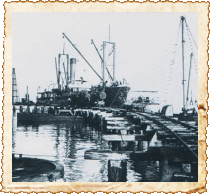
In 1925 the satinay became the m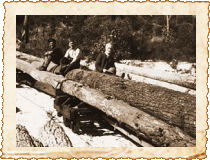 ajor timber logged on the island after it was found to be resistant to marine borers and became popular for use in marine conditions around the world. Satinays, logged heavily in the Pile Valley area, were used in the construction of the Suez Canal and to rebuild the London Docks after World War II.
Central Station, a former logging camp, is now a Queensland Parks and Wildlife Service ranger information station and interpretive centre.